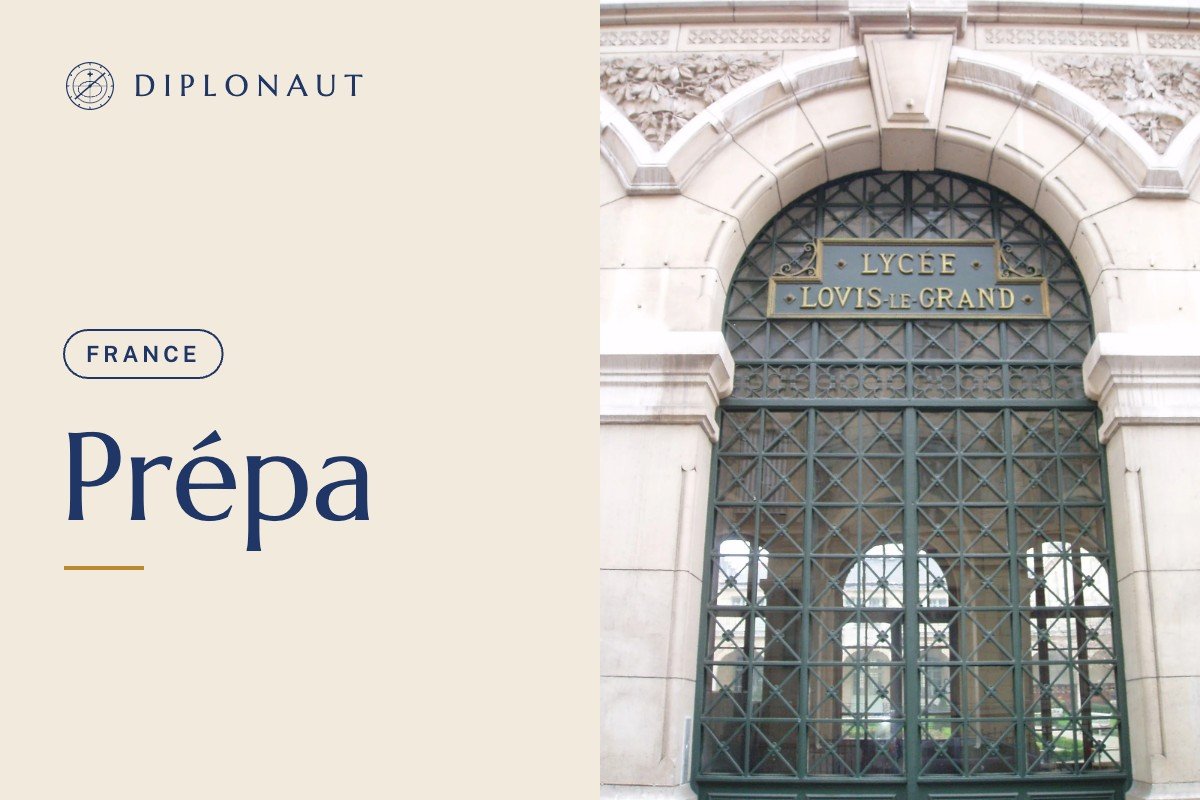
Classes prépa (classes préparatoires aux grandes écoles, CPGE) are two-year selective courses taught in French high schools that prepare students for the entrance exams of the grandes écoles. International students can apply to a prépa through Parcoursup, but most who reach a grande école from a foreign university use the school’s own international track.
For tuition, the student visa and the money to show, the Diplonaut France guide puts the official rules on one page.
What are classes prépa (CPGE)?
The French higher education ministry describes CPGE as selective courses in high schools (lycées). They prepare students for the competitive entrance exams (concours) of the grandes écoles.
Grandes écoles are selective schools outside the university system. They include the écoles normales supérieures (ENS), and engineering, business, veterinary and military schools.
A prépa lasts two years, or three if a student repeats the second year. It is not a diploma in itself. Programs are set nationally and cover several subjects.
Campus France reports 86,900 students in CPGE in the 2024 academic year, 62% of them in science tracks. Public institutions enroll 98% of them.
Three families of prépa tracks
The ministry groups prépas into three families. The acronyms are the official track names: MPSI, for example, stands for mathematics, physics and engineering science.
| Family | First-year tracks (examples) | Main exams they prepare for |
|---|---|---|
| Science | MPSI, MP2I, PCSI, PTSI, BCPST | Shared exams such as X-ENS, Mines-Ponts, Centrale-Supélec and agro-véto |
| Economics and business | ECG, ECT, D1, D2 | The BCE and Ecricome business school groups, and the ENS exams for D1 and D2 |
| Literature | A/L (Lettres), B/L (Lettres et sciences sociales) | Shared written exams used by several schools: the BEL (Banque d’épreuves littéraires) and the BLSES |
Science prépas lead to eight shared written exams (banques d’épreuves), which split into more than twenty separate competitive exams, according to the ministry.
Classes prépa for international students: how admission works
Admission is on file. Each lycée selects its students through Parcoursup, the national platform for first-year higher education. It looks at grades and the coherence of the student’s path.
The ministry says prépas recruit mainly final-year students from a French or foreign high school, with a baccalauréat or an equivalent title. Students already in higher education can also apply.
The usual calendar on the ministry page: applications on Parcoursup from mid-January to early March, then admission offers from June 1 to mid-July.
Candidates abroad can face specific rules depending on their nationality and diploma. Our article on how to apply to French universities from the US explains Parcoursup and the Campus France “Études en France” procedure. Then check each lycée’s own page.
Grandes écoles admission for Americans: the international tracks
Many grandes écoles also admit students from foreign universities through separate tracks. Here are two public schools, as they publish their rules.
| École polytechnique: International Track (FUI) | ENS-PSL: International Selection | |
|---|---|---|
| Who can apply | Foreign nationals under 25 on January 1, 2027, with at least two years of university science or engineering abroad | Foreign students under 26, with at least two years (sciences) or three years (arts and humanities) of university study abroad |
| Selection | Academic file, then two oral exams by video | Application file, a shortlist, then remote tests |
| Language | Exams in English or French; most courses in French, with an intensive French program for admitted students | Sciences orals in French or English; arts and humanities tests in French |
| Dates | 2027 entry: applications closed in mid-September 2026; orals November 2 to 15, 2026 | 2027 session: applications close December 15, 2026 |
| Leads to | The Ingénieur polytechnicien program, starting September 2027 | Three years leading to a master’s and the ENS diploma, with a grant and a campus room |
At École polytechnique, the international track is reserved for foreign nationals. French nationals, including dual citizens, must use other tracks. The school also opens its prépa exam route to international students who took prépa in France.
Other engineering and business schools run their own international admissions. Check whether a program leads to a diploma recognized by the state, as our article on English-taught degrees in France explains.
What to expect: credits, language and cost
- Credits. A prépa earns European credits: 60 for the first year, 120 for both. A certificate (attestation descriptive du parcours de formation) lists them, and the receiving university decides whether to count them.
- A way back. These credits let students who do not pass a concours continue at a university. Our article on the French licence and the US bachelor’s explains how French degrees are built.
- Language. Prépas follow French national programs, so plan for a strong level of French.
- Cost. The ministry page does not list fees. Ask the lycée directly, and see the France guide for the visa and the money to show.
To weigh France against other countries, use the Diplonaut comparator, or read about a degree abroad versus a US college. Rule changes are tracked on Latest changes.
Frequently asked questions
Can international students apply to classes prépa?
Yes. Each lycée selects candidates on file through Parcoursup. The ministry says prépas recruit mainly final-year students from French or foreign high schools, with a baccalauréat or an equivalent title.
How do Americans get into a grande école?
There are two main routes: a prépa followed by a competitive exam, or a school’s own international track after university study abroad, such as the École polytechnique International Track or the ENS International Selection.
Are classes prépa taught in English?
Prépas follow French national programs. Some international tracks let you take the exams in English: École polytechnique says its international track is the only entrance route that can be taken in English.
What happens if I do not pass the concours?
Prépa years earn European credits, 60 for the first year and 120 for both. A certificate lists them, and the university you apply to decides whether to count them.
Official sources
- French higher education ministry: Classes préparatoires aux grandes écoles (CPGE)
- Campus France: students in CPGE, 2024
- École polytechnique: International Entrance Exam 2027 (FUI) notice
- École polytechnique: about the competitive entrance exam
- ENS-PSL: International selection
Checked November 14, 2026. Diplonaut is not affiliated with any school or evaluation body.