First published in June 2020, fully refreshed in October 2026.
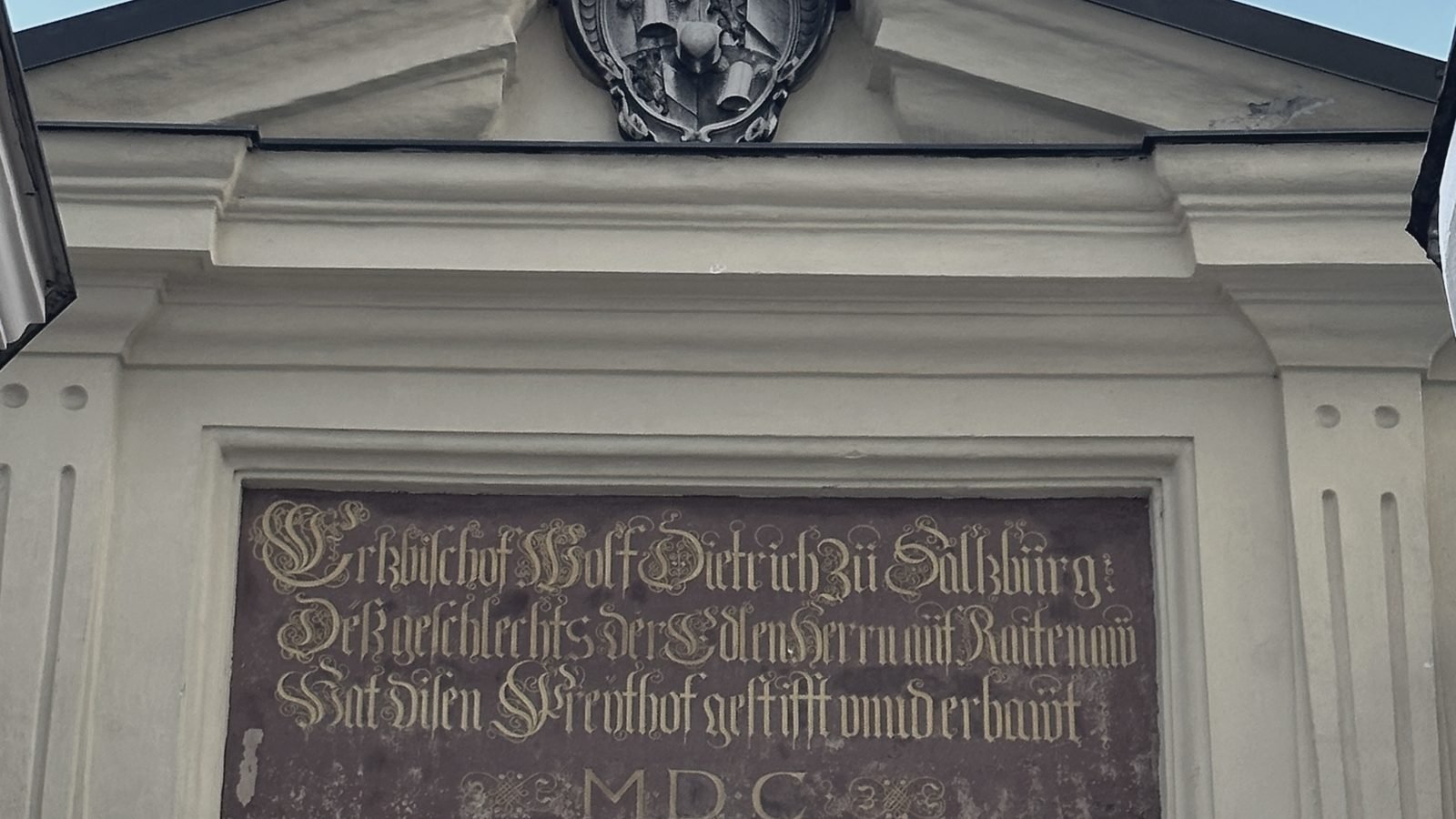
An intriguing custom in Austria is for people to have titles and to be called by them.
After reading a couple of posts on TripAdvisor, I wanted to write something about these titles, since they are not so commonly seen elsewhere. Austrian titles go back to the times of the monarchy. Chris Ebbert explains what it is all about in an answer on Quora:
The stratification of Austrian society is highly polarised between elitist and blue collar, and works a bit like this:
Top layer, elitist: The crème de la crème of Austrian society is reserved for those with titles. Be they aristocratic, academic, or both, if you are a Herr Professor Doktor Hofrat von Blabla-Funkelstein”, you are at the top. Necessarily, that will mean old family, old money, longstanding connections and network, and very likely a nice old family home by a lake in the Steiermark region, possibly a Mercedes G model, and a doctor’s office and honorary professorship in Vienna, Graz, or Salzburg. People like that will live lovely lives, with high salaries, plenty of paid holidays, and lots of international travel.
The short answer
Austria has three kinds of titles, and they are easy to confuse:
- Academic degrees, earned at a university: Mag., Dr., Dipl.-Ing., and since the Bologna reform BA, BSc, MA, MSc and PhD.
- Official titles (Amtstitel), which come with a rank in the civil service. Hofrat is the best known.
- Professional titles (Berufstitel), conferred by the Federal President as an honour: Kommerzialrat, Medizinalrat, Professor, Kammersänger and others, about twenty in all.
Using a degree is a right, not a duty. In formal settings, though, titles are still actively used: use last names and the appropriate title until your Austrian host or colleagues invite you to use first names.
Academic degrees
| Title | What it is | Where it is written |
|---|---|---|
| Mag. (Magister, Magistra) | The traditional diploma degree, at master’s level | Before the name |
| Dipl.-Ing. or DI (Diplom-Ingenieur) | A master’s-level degree in technical fields, from a university or a university of applied sciences | Before the name |
| Dr. (Doktor) | A doctoral degree, earned after doctoral studies | Before the name |
| Dr. med. univ. | The degree in human medicine, which is not a research doctorate | Before the name |
| BA, BSc, MA, MSc, PhD | The degrees introduced with the Bologna reform | After the name |
Feminine forms are allowed: Mag.a, Dr.in. If someone holds both a Magister and a doctorate, both go before the name, as in “Mag. Dr.” followed by the name. In conversation only the highest degree is used: “Herr Doktor”, “Frau Doktor”.
Ingenieur is not an academic degree. Since 1 May 2017 it has been a qualification. Graduates of a higher technical school (HTL) can obtain it after at least three years of relevant practice and an interview before a certification body, and it sits at level 6 of the national qualifications framework.
The Federal Ministry of Women, Science and Research publishes the rules on academic degrees (in German). With ENIC NARIC Austria it also keeps a list of degrees and how to write them, last updated in August 2026.
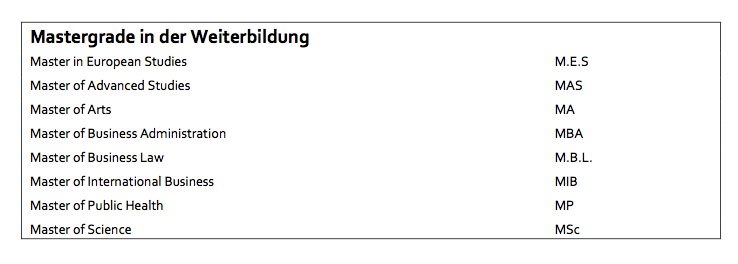
Imagine when you fill out an application…
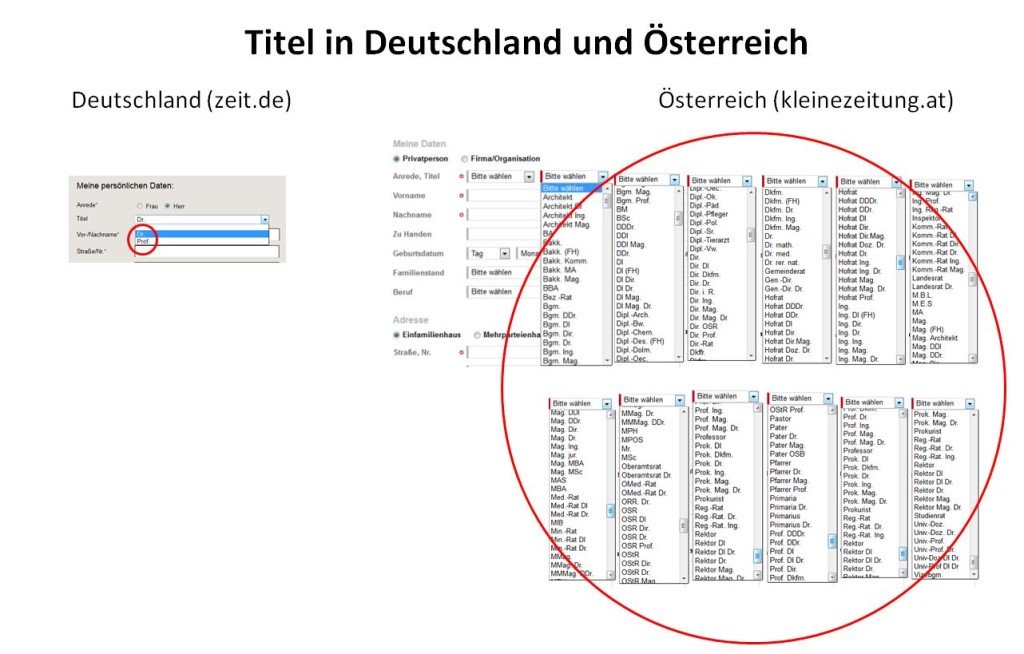
Official and professional titles
These titles are not earned at a university. The Federal President confers the professional titles, under a resolution of 2002 that lists about twenty of them.
| Title | Who receives it |
|---|---|
| Hofrat | Senior civil servants. It is both a rank in the federal civil service and a professional title for public-sector staff |
| Kommerzialrat | People in business. The Chamber of Commerce asks for at least 15 years of meritorious activity and a minimum age of 50 |
| Medizinalrat, Obermedizinalrat | Members of the medical profession |
| Professor | People active in art or science. This is separate from holding a university chair |
| Kammersänger, Kammerschauspieler | Singers and actors working at an Austrian music or theatre institution |
The resolution was amended in February 2026. A title can now be revoked, and it cannot be conferred on someone with a serious criminal conviction or a Nazi past.
“Frau Doktor”
It used to be that the wife of a man with a title was addressed by it: “Frau Doktor” was the wife of a “Doktor”. Today “Frau Doktor” is a woman who holds the doctorate herself.
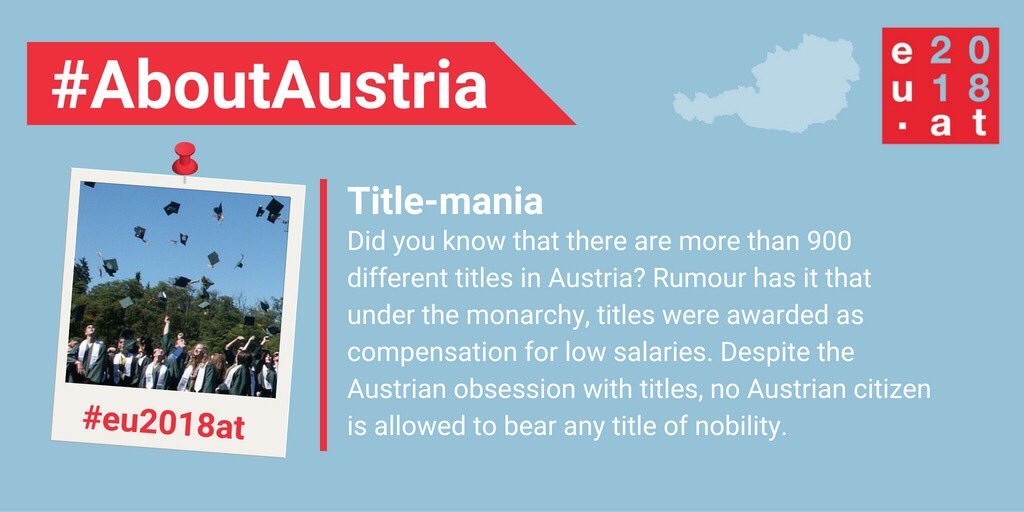
Germany had the same tradition. German commercials from the 90s featured a “Zahnarztfrau” giving her seal of approval to whitening toothpaste, you know, because she is married to a dentist, so she knows!
How titles are used day to day
- In documents. A degree can be entered in official documents such as a passport, a driving licence or the e-card, in its abbreviated form. There is no obligation to do so.
- At work. The Austrian Business Agency still advises newcomers that “academic degrees and titles are actively used in Austria” and that you should pay attention to the correct form of address.
- In conversation. Degrees are increasingly dropped when people speak, with “Doktor” the main exception, and the Bologna degrees written after the name lend themselves less to it.
Noble titles are abolished
On a side note, Austrian citizens are not allowed to have nobility titles anymore. The law of 3 April 1919 abolished the nobility and bans noble designations such as “von”. In 2019 the Constitutional Court confirmed the ban in the case of Karl Habsburg-Lothringen, who used “von” on his website. It also found that the fine, still written in 1919 crowns, can no longer be imposed.
I once asked my husband if we could add a “von” in front of our last name, and he said it is “illegal”. I guess we would be allowed to in the U.S. if we wanted: Kat Von D has it, but I have no idea whether she actually has noble ancestry.

If your degree is from another country
A degree from a recognized institution abroad can be used in Austria exactly as it was awarded, with no separate recognition. You cannot swap it for an Austrian one: an MA does not become a “Mag.”. With few exceptions, only degrees from the EU, the EEA, Switzerland and the United Kingdom can be entered in official documents. Nostrification makes a foreign degree fully equivalent to an Austrian one, but it is meant for cases where an Austrian degree is legally required.
If you are thinking of studying in Austria, the comparator shows the current figures next to 14 other destinations. As of October 2026: tuition of €1,453 a year at public universities for students from outside the EU, €1,308.39 a month in funds to show for students aged 24 or over (less under 24), 20 hours of work a week, and 12 months to look for a job after graduating.
Frequently asked questions
Do I have to use titles when I address people in Austria?
In formal and professional settings it is still expected. Use the last name and the title, such as “Frau Doktor” or “Herr Magister”, until you are invited to use first names. In conversation, degrees other than “Doktor” are often dropped.
Does a title go before or after the name?
Mag., Dr. and Dipl.-Ing. go before the name. Bachelor’s and master’s degrees such as BA, BSc, MA and MSc, and the PhD, go after it.
Is Ingenieur an academic degree?
No. Since 1 May 2017 it has been a qualification obtained after a higher technical school diploma, at least three years of relevant practice and a certification interview. Diplom-Ingenieur, on the other hand, is a master’s-level academic degree.
Who awards titles such as Hofrat or Kommerzialrat?
The Federal President confers professional titles, on a proposal. Hofrat is also a rank held by senior federal civil servants.
Can I add “von” to my name in Austria?
Not if you are an Austrian citizen. Noble designations have been banned since 1919, and the Constitutional Court confirmed the ban in 2019.
Can I use my foreign degree in Austria?
Yes, in the form in which it was awarded. You cannot replace it with an Austrian degree without nostrification.
Sources
Checked on 1 October 2026.
- Federal Ministry of Women, Science and Research: academic degrees and how to use them
- Universities Act, section 51 and section 88
- Ingenieurgesetz 2017 and the ministry’s page on the Ingenieur qualification
- Resolution of the Federal President on professional titles and its 2026 amendment
- oesterreich.gv.at: professional titles and degrees in passports
- Civil servants act, section 140 (Hofrat)
- Austrian Economic Chamber: leaflet on the title Kommerzialrat
- Law abolishing the nobility, 3 April 1919 and the Constitutional Court’s 2019 decision
- Austrian Business Agency: business etiquette in Austria
- Salzburger Nachrichten: Wo der Titel regiert
- Schreibwerkstatt: Der Umgang mit akademischen Graden
Leave a Reply