
First published in July 2020, fully refreshed in September 2026.
The world is our oyster, and each international experience is a pearl. When I first wrote this post in 2020, travel was on pause and nobody knew when students would move again. They did. What changed instead is the rulebook: visas, the money you have to show, work rights and fees now shift several times a year.
So the question is the same, but the way to answer it is different. Two tools on this site do most of the work, so open them first:
CHOOSE A COUNTRY
Comparator
15 destinations side by side: tuition, funds to show, work rights during and after your studies, and degree recognition. Every figure links to its official source.
CHOOSE A SCHOOL
Diplonaut Check
Search the schools on your shortlist, add them to your plan and compare register status, tuition trend and credential-evaluation policy.
The short answer
There is no single best country to study in. If cost matters and you are thinking long term, one strong path is to study in Europe for your bachelor’s degree, then go to the United States or the United Kingdom for a graduate degree. Tuition is far lower, the degree is recognized, and you get three to four years abroad instead of one semester. The rest of this post explains why, and where each tool fits.
Students are moving again, and the rules keep moving too
Studying outside your home country is as attractive as ever. Take the United States: according to Open Doors, it hosted 1,177,766 international students in 2024/25, more than ever. The top places of origin were:
- India (363,019 students)
- China (265,919 students)
- South Korea (42,293 students)
In 2019 the order was China first, India second. That alone tells you how quickly the picture changes.
And it is still changing. International first-year applications through the Common App fell 10% in the 2025–26 cycle, UK student visa applications fell 16% in the year to August 2026, and Canada raised its proof of funds to CA$23,448 on 1 September 2026. There is good news too: the UK is rejoining Erasmus+ from January 2027. You can follow all of this in Latest news and in the dated record of official rule changes.
Think long term
Take a pause and think with a long-term mindset. Rules will change again before you graduate, so choose a path that still makes sense if one door closes.
One path I keep coming back to: what about preparing an undergraduate degree in a European country, then pursuing a graduate degree in the United States or the United Kingdom?
Do you already know your field of interest?
If you already know the field you want to pursue, list all the schools known for it. Do your research, start now and keep your findings organized. Ask questions on Quora, join Reddit communities, write to people at the schools you are interested in. I remember doing that for a photography school in Arles. I was so interested that I was preparing for the entrance exam. But after talking to a student who was enrolled there at the time, and hearing what he shared about the culture, I changed my mind.
Today you can add one more step: search your shortlist in Diplonaut Check. Add the schools you are weighing to your plan and compare their official register status, tuition trend and credential-evaluation policy side by side. It currently covers a first set of schools in the United States, Canada, the UK, Germany, France and Australia.
Do you see the international experience as valuable to your goals?
You should, it will make you stand out. Six months or a year of study abroad is nice, and valuable, but did you ever think about a full three or four years?
If you are concerned about the financial investment in your higher education, I can see why you would study in Europe for an undergraduate degree, then go to the US for a graduate program. I think it is a smart move, and here is why.
Why a bachelor’s in Europe can be a smart first step
1. A European undergraduate degree is recognized
Look at each country closely before you decide: language of instruction, programs, tuition. A good resource is the ENIC-NARIC country pages. Pick the country you are interested in and see how its system works. Beware, it’s a lot of government websites, but do your research thoroughly, it’s worth it!
The European Credit Transfer and Accumulation System (ECTS) has been used across Europe since the Bologna reform, though each country differs. French, German, Italian and Spanish bachelor’s degrees are earned in ECTS credits that transfer across Europe. If you later apply to a US graduate program and have your credentials evaluated, a degree from a recognized institution is generally accepted, though some US programs ask for four years of undergraduate study, so check each one. The “Degree recognized” column of the comparator shows what counts as a recognized institution in each country, and the Evaluation timing tab in Diplonaut Check helps you plan backwards from your deadline, because the evaluator’s clock only starts once it has all your documents and your payment.
One thing to note: most undergraduate programs are taught in the language of the country, German in Germany, French in France. English-taught and bilingual programs keep growing, but check the language of each program before you fall in love with it.
2. The cost gap is real
The comparator lists master’s tuition, which is the step you would take later: $25k to $40k a year in the United States, against near €0 at German public universities and €3,950 a year at French public universities for non-EU students. On the undergraduate side, cost comparisons puts average US public out-of-state tuition at $31,880 a year, tuition alone, while Germany’s public universities are largely free.
Tuition is only part of it. If you need a student visa you also have to show funds: €11,904 a year in a blocked account for Germany, €877.50 a month for France, €13,600 a year for the Netherlands. All three let you work while you study (20 hours a week in Germany and France, 16 in the Netherlands) and give you 12 months after graduating to look for work. These figures move, so check the comparator again right before you apply.
3. You get the authentic experience
Europe is diverse: student life in Italy isn’t like France or Belgium, which is why students within Europe enroll in Erasmus to experience it for themselves. With a full undergraduate program you get three to four years in a new country. You can’t compare that with six months or a year abroad, when you end up leaving just as you finally adjust.
Three places to start looking
I picked a few examples to illustrate.
France: Toulouse
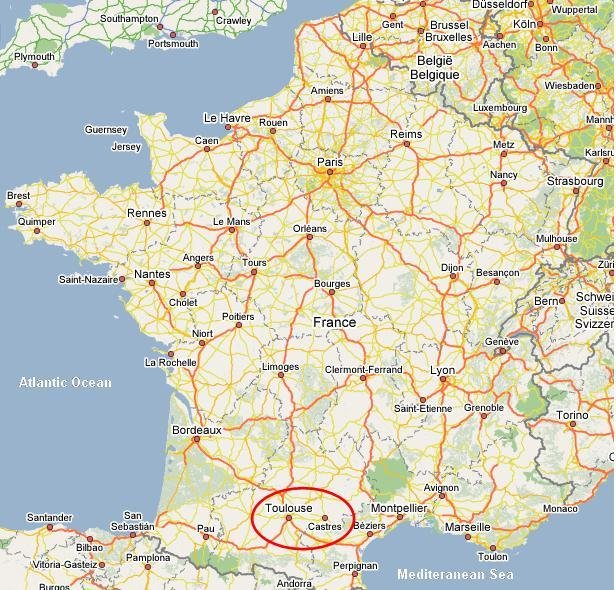
Toulouse has been a university city since 1229, which makes it one of the oldest in Europe. Today its universities and schools work together as one community of about 110,000 students, and Toulouse again ranks first in L’Etudiant’s 2026 ranking of the best student cities in France, helped by free public transport for students. It sits in the Occitanie region of southern France, between the Pyrenees, the Atlantic and the Mediterranean.
To enroll at undergraduate level you need the French baccalauréat or an equivalent foreign certificate. Requirements vary with your nationality, your country of residence, your level of education and the program. English-taught bachelor’s programs at French public universities are still rare, so plan on learning French. Note that a French bachelor’s (licence) takes three years, and the French system counts years of study after the baccalauréat: “Bac+3” means three years after high school, “Bac+5” means five. Worth applying, in my opinion.
Germany: Bremen
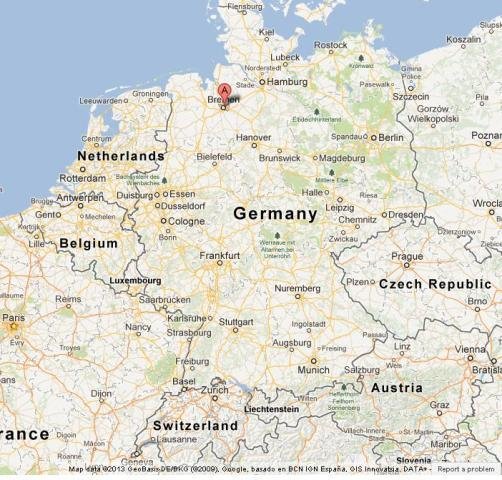
Constructor University in Bremen was called Jacobs University when I first wrote this post, and was renamed in 2022. It is a private, English-speaking campus university with bachelor’s programs in computer science, business, social sciences and natural sciences. Tuition is around €20,000 a year, a very different bill from Germany’s public universities, so look at its scholarships too. Some subjects are more likely to be taught in English than others, business and engineering for example, so it leaves you with choices. Also, check out the campus, so green!
Netherlands: Maastricht
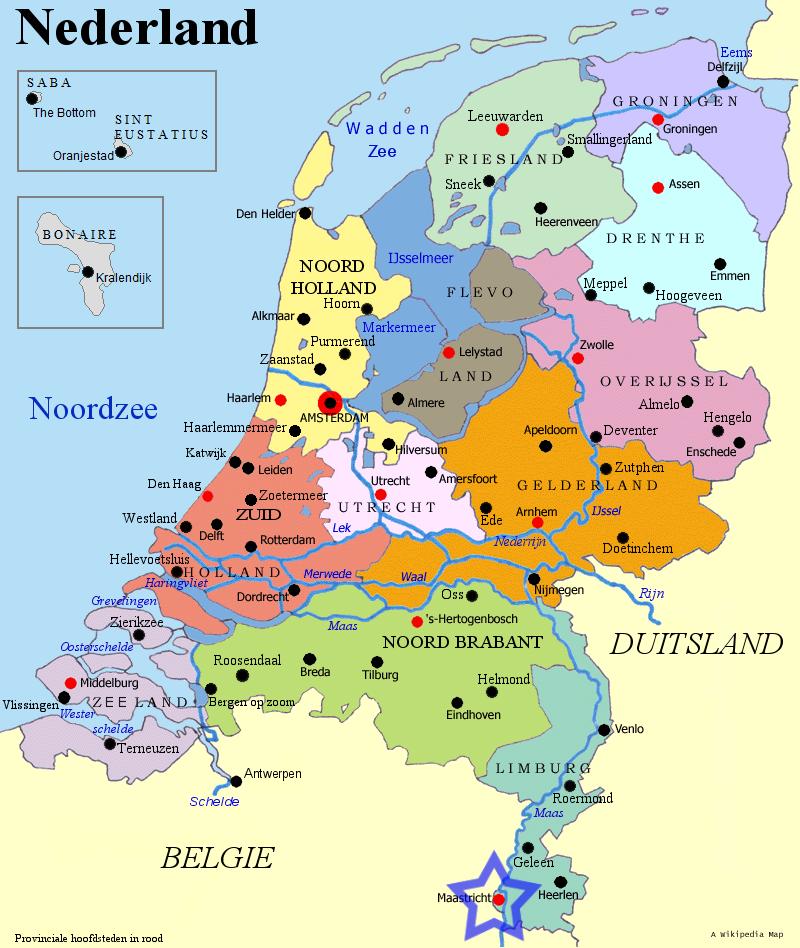
Maastricht University offers 27 bachelor’s programs across six faculties, many of them taught in English, which is one reason the Netherlands is so attractive for international students. Check the language of each program you are considering. You can also browse bachelor’s programs across Europe at Bachelorsportal. If you need a visa, the comparator currently shows €13,600 a year in funds to show and 16 hours of work a week during term.
Your Diplonaut toolkit: the key links and what to use them for
This site has changed a lot since 2020. Two tools carry most of the decision.
Start with these two
- Comparator: use it to choose a country. It puts 17 destinations side by side on tuition, funds to show, work hours while studying, work rights after graduating, estimated yearly total and degree recognition. Every figure links to its official source.
- Diplonaut Check: use it to choose a school. Search schools, build your plan and compare register status, tuition trend and credential-evaluation policy. Its Evaluation timing tab shows whether your evaluation can reach the school before your deadline, and When verification stalls explains what to do when your file is stuck.
Then use the rest as you need it
- Latest official updates: the newest and upcoming rule changes, each from the government that made it. Check it right before you apply.
- All official changes: the full dated history of every verified rule change, which you can filter by country and year. Use it to see how stable a destination has been.
- Latest news: verified developments beyond formal rule changes, such as funding cuts, application trends and fraud cases, each linked to its primary source.
- Cost comparisons: sourced comparisons of tuition, fees and hidden costs between countries.
- Emerging destinations: countries outside the main 17 that are investing in international students, such as Kazakhstan, Uzbekistan, Türkiye and the UAE. A starting point for your own research.
- Arts and music education: a comparator for studying arts and music internationally, a field most study-abroad content ignores.
- Foreign-trained doctors by country: for future medical graduates, how much each country relies on doctors trained elsewhere.
- Guides (in French): step-by-step guides for French-speaking students on credential evaluations, degree recognition, funding and languages.
- How we check: how the figures are sourced and verified.
- About: who is behind Diplonaut, why it exists and how it is funded.
- Contact: report a rule that changed or an error. Corrections are checked against the official source.
- Privacy: what data the site collects and what it never does.
- @DiplonautHQ on X: smaller cost shifts and comparisons between verified updates.
Frequently asked questions
Usually, yes. A bachelor’s degree from a recognized European institution is generally accepted for US graduate admission, often after a credential evaluation. Some US programs ask for four years of undergraduate study, so check each graduate program before you apply.
Often, yes. As of September 2026, public universities in Germany charge little or no tuition and French public universities charge non-EU students €3,950 a year for a master’s, while average out-of-state tuition at US public universities is $31,880 a year. Living costs and the funds you must show for a visa still apply.
Yes, but it depends on the country and the level. Most bachelor’s programs are taught in the national language. The Netherlands offers many English-taught bachelor’s programs, and some private universities, such as Constructor University in Germany, teach entirely in English.
As of September 2026: €11,904 a year in a blocked account for Germany, €877.50 a month for France and €13,600 a year for the Netherlands. These amounts change, so check the Diplonaut comparator right before you apply.
Yes, within limits. As of September 2026, students can work 20 hours a week in Germany and France and 16 hours a week in the Netherlands during term. All three countries also give graduates 12 months to look for work after their degree.
In conclusion
After your undergraduate program, you can get admitted to an excellent graduate program in the United States, or you might want to continue in Europe, who knows! Whatever you choose, check the rules at the source before you commit. Good luck with everything.
Leave a Reply