First published in July 2020, fully refreshed in October 2026.
I have had my fair share of applying for jobs that require one or more foreign languages, and of hiring for them. One question I ask candidates is:
“How do you self-assess your language skills based on the CEFR scale?”
Some people look at me with a blank stare. Others can tell me right away, “I am B2 in French” or “I am C1”. With the second kind of answer, I know they have at least done a self-assessment.
The short answer
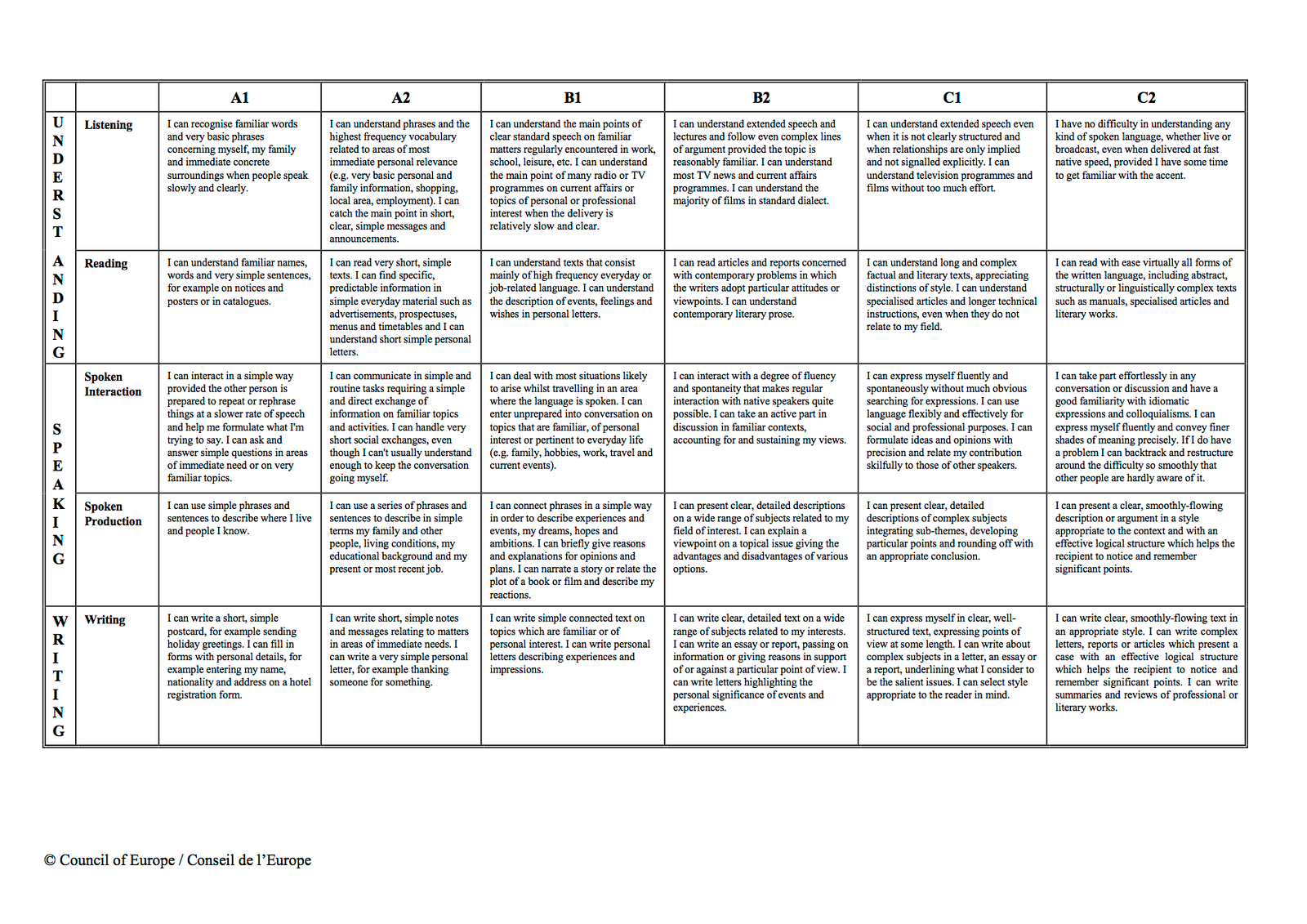
For most practical purposes, fluent starts at B2 on the Common European Framework of Reference for Languages (CEFR). The Council of Europe describes a B2 speaker as someone who “can interact with a degree of fluency and spontaneity that makes regular interaction with native speakers quite possible without strain for either party”. Universities and some professions ask for C1, where a speaker “can express him/herself fluently and spontaneously without much obvious searching for expressions”.
So the useful answer is a level, not a yes or a no. Saying you are a beginner, intermediate or advanced is too broad to mean much, unless the employer does not really need the skill and is asking as a formality. Not necessarily a good sign, by the way.
What the CEFR is
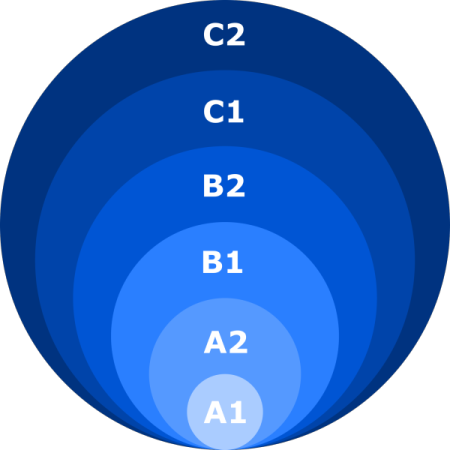
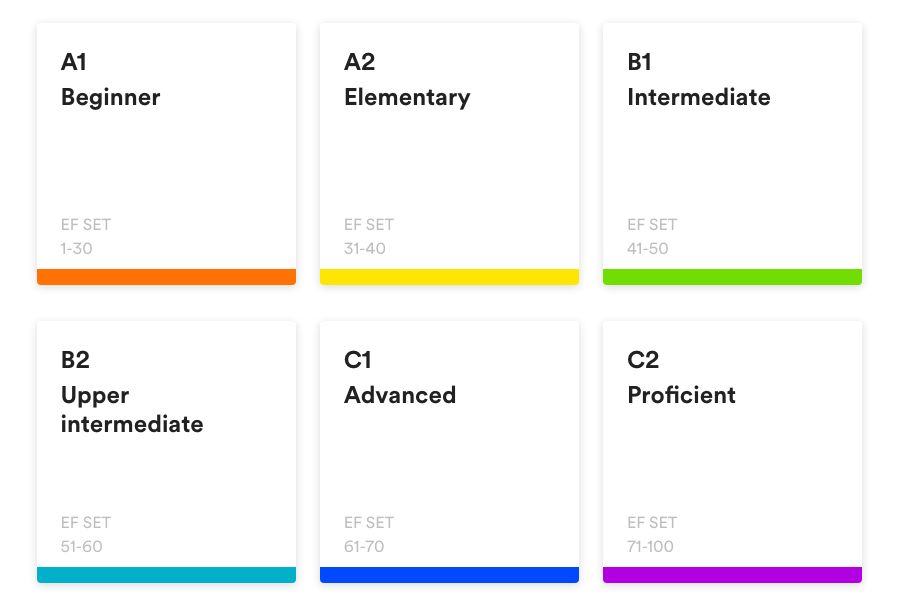
The CEFR measures and describes language ability on six levels, from A1 to C2. The levels are defined through “can-do” descriptors: what you can actually do in the language, skill by skill. Its starting point was a symposium in Rüschlikon, Switzerland, in November 1991, and the Council of Europe launched it in 2001. The full level descriptions are on its website.
When I prepared my master’s in French didactics, in order to teach French as a foreign language, this was the standard I worked with, and it was a must-read. It is used across the European Union and well beyond it.
One thing has changed since I first wrote this post. In 2020 the Council of Europe published a Companion Volume. It adds descriptors for mediation, online interaction, plurilingual competence and sign languages, plus a Pre-A1 level, and it revises the references to “native speakers” in its descriptors. The six levels themselves did not change.
How to assess yourself
Use the Council of Europe’s self-assessment grid. It rates listening, reading, spoken interaction, spoken production and writing separately, because most of us are not at the same level in all of them.
Three things make a self-assessment worth saying out loud:
- It is recent. A level from ten years ago is a memory.
- It is given by skill. “B2 speaking, C1 reading” tells an employer more than “fluent”.
- It can be backed up. Start with a free check, such as Cambridge’s Test your English or the EF SET, then take a recognized exam if someone will rely on the result.
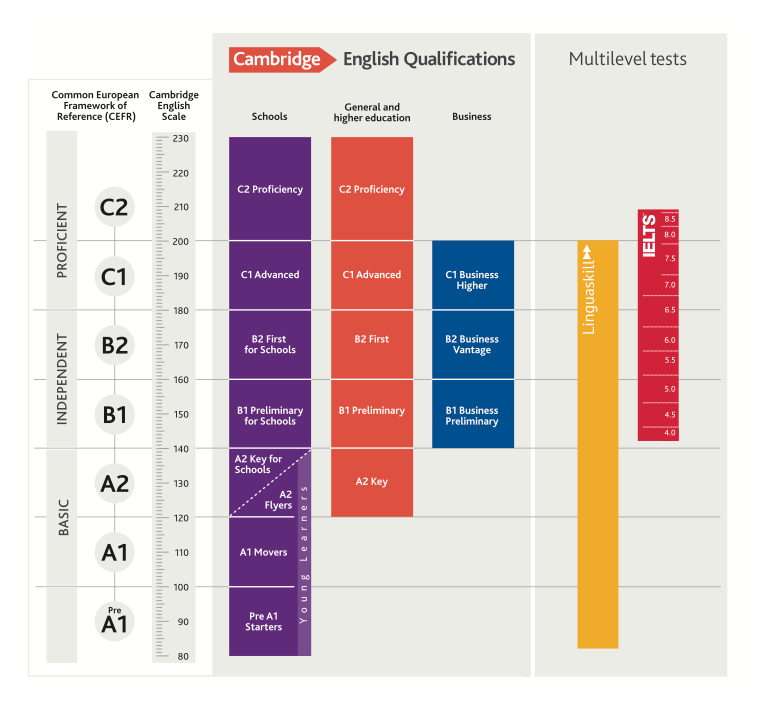
Below is the CEFR next to the Cambridge English Scale: on that scale B2 is 160 to 179, C1 is 180 to 199 and C2 is 200 to 230.
A degree is not a level
Many university programs do little to prepare foreign language graduates for practical settings, where the communicative requirements are different. Paul Tucker makes the point in a post for Transparent Language, about hiring at the U.S. State Department’s Foreign Service Institute:
“In fact, it’s a well-known problem that many university degree programs focus on the historical, literary, and academic aspects of that language, rather than on the communicative competence that is of importance to an organization like the U.S. State Department and that forms the basis for the ILR Skill Level Descriptors that FSI’s tests are designed to measure.”
I work in the United States now, in a setting where foreign languages are used in the workplace, and I like to use the CEFR to understand what a current or future employee can do in a language. If you apply for a translation job, the requirement is not the same as for a position where you only need to read a text. The tests differ as well, and whatever the job, you will have to prove your abilities.
In the United States
The scale that dominates in the US is ACTFL’s, not the CEFR. ACTFL publishes an official correspondence between the two. For speaking and writing, Advanced Low and Advanced Mid correspond to B2, Advanced High to C1 and Superior to C2. So “Advanced” on an American résumé means roughly B2.
What universities ask in 2026
A level only matters against a requirement. Four examples, checked on 1 October 2026:
| University | Programs | What it asks |
|---|---|---|
| University of Vienna | Taught in German | A2 to apply, then C1 for all bachelor’s and diploma programs and most master’s |
| University of Vienna | Most master’s taught in English | B2: IELTS Academic 6.5 or TOEFL iBT 94 |
| Freie Universität Berlin | Taught in German | DSH 2, TestDaF 4 in all four parts, telc C1 Hochschule with at least the grade “gut”, or Goethe C2 |
| TU Delft | MSc taught in English | IELTS 7.0, with 6.5 in each section |
Two things to watch. IELTS itself places the C1 minimum between bands 6.5 and 7, so 6.5 is read as B2 by some universities and as almost C1 by others. And since 21 January 2026, TOEFL iBT reports scores on a scale of 1 to 6, with a comparable score out of 120 during a two-year transition. Many university pages still quote the scale out of 120, so check which one your university means.
So, to answer the question of this post: according to some, including Steve Kaufmann in the video below, you can consider yourself fluent once you reach B2. That is more likely to hold in the US. In Europe, where it is more common to be bilingual or trilingual, the bar leans toward C1 and C2.
Read Sean Young’s answer to At what stage can a language learner be considered fluent? on Quora.
If the language requirement is one part of choosing where to study, the comparator puts the others side by side for 15 destinations: tuition, funds to show, work rights and degree recognition. Diplonaut Check does the same for the schools on your shortlist.
Frequently asked questions
Is B2 fluent?
In everyday and most professional settings, yes. The Council of Europe’s B2 descriptor speaks of “a degree of fluency and spontaneity” that makes regular interaction possible “without strain for either party”. For university study in the language, or for translation, expect to be asked for C1 or C2.
What level of German do I need to study in Austria or Germany?
As of October 2026, the University of Vienna asks for A2 when you apply and C1 for admission to its German-taught bachelor’s and diploma programs and most master’s. Freie Universität Berlin asks for DSH 2, TestDaF 4 in all four parts, telc C1 Hochschule with at least the grade “gut”, or Goethe C2. Requirements differ from one university to the next, so check each program.
What English level do master’s programs taught in English ask for?
Usually B2 to C1. As of October 2026, the University of Vienna asks for IELTS Academic 6.5 or TOEFL iBT 94 for most English-taught master’s, and TU Delft asks for IELTS 7.0 with 6.5 in each section.
How does the CEFR compare with the American ACTFL scale?
ACTFL’s official correspondence places Advanced Low and Advanced Mid at B2, Advanced High at C1 and Superior at C2 for speaking and writing. For reading and listening, Advanced Mid is B2, Advanced High and Superior are C1, and only Distinguished is C2.
Is the CEFR used for immigration to Canada?
No. Canada uses its own scale, the Canadian Language Benchmarks, and Express Entry accepts only designated tests: CELPIP-General, IELTS General Training and PTE Core for English, TEF Canada and TCF Canada for French.
How can I check my level for free?
Use the Council of Europe’s self-assessment grid, then Cambridge’s Test your English or the EF SET. None of them is an official exam, but they tell you which exam to prepare for.
Sources
Checked on 1 October 2026.
- Council of Europe: CEFR level descriptions
- Council of Europe: global scale of the common reference levels
- Council of Europe: history of the CEFR
- Council of Europe: Companion Volume (2020)
- Council of Europe: self-assessment grids
- ACTFL: Assigning CEFR Ratings to ACTFL Assessments
- Goethe-Institut USA: comparison of language scales
- University of Vienna: German language proficiency and English language proficiency
- Freie Universität Berlin: German language requirements
- TU Delft: MSc admission requirements
- IELTS and the CEFR
- ETS: understanding TOEFL iBT scores
- Cambridge English: B2 First results, C1 Advanced results, C2 Proficiency results
- IRCC: language tests for Express Entry
Leave a Reply